The short answer
Refer a root canal when its difficulty is beyond your training, equipment or comfort, and decide before access rather than partway through. The AAE Endodontic Case Difficulty Assessment Form rates a case as high difficulty when it has one high difficulty factor or three moderate ones, such as severe curvature, calcified canals, resorption, complex trauma or previous treatment with complications.
Key points
- The Dental Board of Australia expects dentists to know when and how to refer when treatment is beyond their own scope or skills.
- The AAE form sorts cases into low, moderate and high difficulty: one high factor, or three moderate ones, makes a case high difficulty.
- The factors fall into three groups: the patient, the tooth and its canals, and what has happened to the tooth before.
- Opening a tooth moves the case up a category on the AAE form, so the decision is cleanest before access.
- A useful referral carries radiographs (and CBCT if taken), the tooth number, the medical history, the case category and your clinical notes.
Jump to a section 11
- Why the root canal referral decision belongs before access
- How the AAE Endodontic Case Difficulty Assessment Form grades a root canal
- Patient factors that make a root canal more difficult
- Tooth and canal factors on the AAE case difficulty form
- Previous treatment, trauma and periodontal involvement
- What the research says about case difficulty and root canal outcomes
- A pre-access check for deciding whether to refer a root canal
- What to include in an endodontic referral
- Root canal treatment risks, alternatives and second opinions
- Referring a root canal to our endodontists in Crows Nest
- Common questions
Why the root canal referral decision belongs before access
Healthdirect describes root canal treatment as care that your dentist or an endodontist provides, and plenty of it belongs in general practice. The question here is narrower: which cases are likely to be harder than they look on the first periapical, and how to spot them before the tooth is opened.
The regulatory starting point is the Dental Board of Australia’s guidelines on scope of practice, which say a dentist must only perform treatments they have been educated and trained in, and are competent in. The same guidelines expect practitioners to know when and how to refer or hand over care if the diagnosis or treatment is beyond their own scope or skills. Referral, read that way, is part of competent general practice rather than an admission about it.
Timing matters because of how difficulty is graded. On the AAE form, a tooth with previous access without complications is already a moderate difficulty case, and previous access with a complication such as a ledge, a perforation or a separated instrument is high difficulty. A case that was moderate at the first appointment can be high difficulty by the second.
How the AAE Endodontic Case Difficulty Assessment Form grades a root canal
The American Association of Endodontists designed its Endodontic Case Difficulty Assessment Form and Guidelines for endodontic teaching, and says dentists may also use it to help with referral decisions and record keeping. It treats each listed condition as a potential risk factor that may complicate treatment and adversely affect the outcome, and it is explicit that the form warrants no particular result.
Each criterion has a low, moderate and high column. The level of the case comes from the worst column it reaches, and moderate factors add up.
| Level | How the AAE defines it | What the AAE says about the outcome |
|---|---|---|
| Low difficulty | Only factors from the low difficulty column | A favourable outcome should be attainable by a competent practitioner with limited experience |
| Moderate difficulty | One or two factors from the moderate column | A favourable outcome may be challenging for a competent, experienced practitioner |
| High difficulty | Three or more moderate factors, or at least one high factor | A favourable outcome may be challenging even for a highly experienced practitioner with a long record of favourable outcomes |
The AAE’s own test
The form ends with a plain instruction: review the assessment, and if the level of difficulty exceeds your experience and comfort, consider referral to an endodontist. It is a prompt for judgement, not a score that decides for you.
Patient factors that make a root canal more difficult
The first group on the form has nothing to do with the canals. A straightforward premolar can still be a difficult appointment, and these factors are easy to miss when the radiograph looks simple.
- Medical history. Low is ASA class 1 or 2. One or more medical problems (ASA 3) is moderate; a complex medical history, serious illness or disability (ASA 4) is high.
- Anaesthesia. Vasoconstrictor intolerance is moderate. Difficulty achieving or maintaining anaesthesia is high.
- Patient disposition. Anxious but cooperative is moderate; uncooperative is high. Some patients in this group are better served by IV sedation, which has its own risks and is discussed at the consultation.
- Mouth opening and gag reflex. A slight limitation in opening, or occasional gagging with radiographs, is moderate. Significant limitation, or a gag reflex that has compromised past dental care, is high.
- Emergency presentation. Moderate pain or swelling is moderate; severe pain or swelling is high.
Tooth and canal factors on the AAE case difficulty form
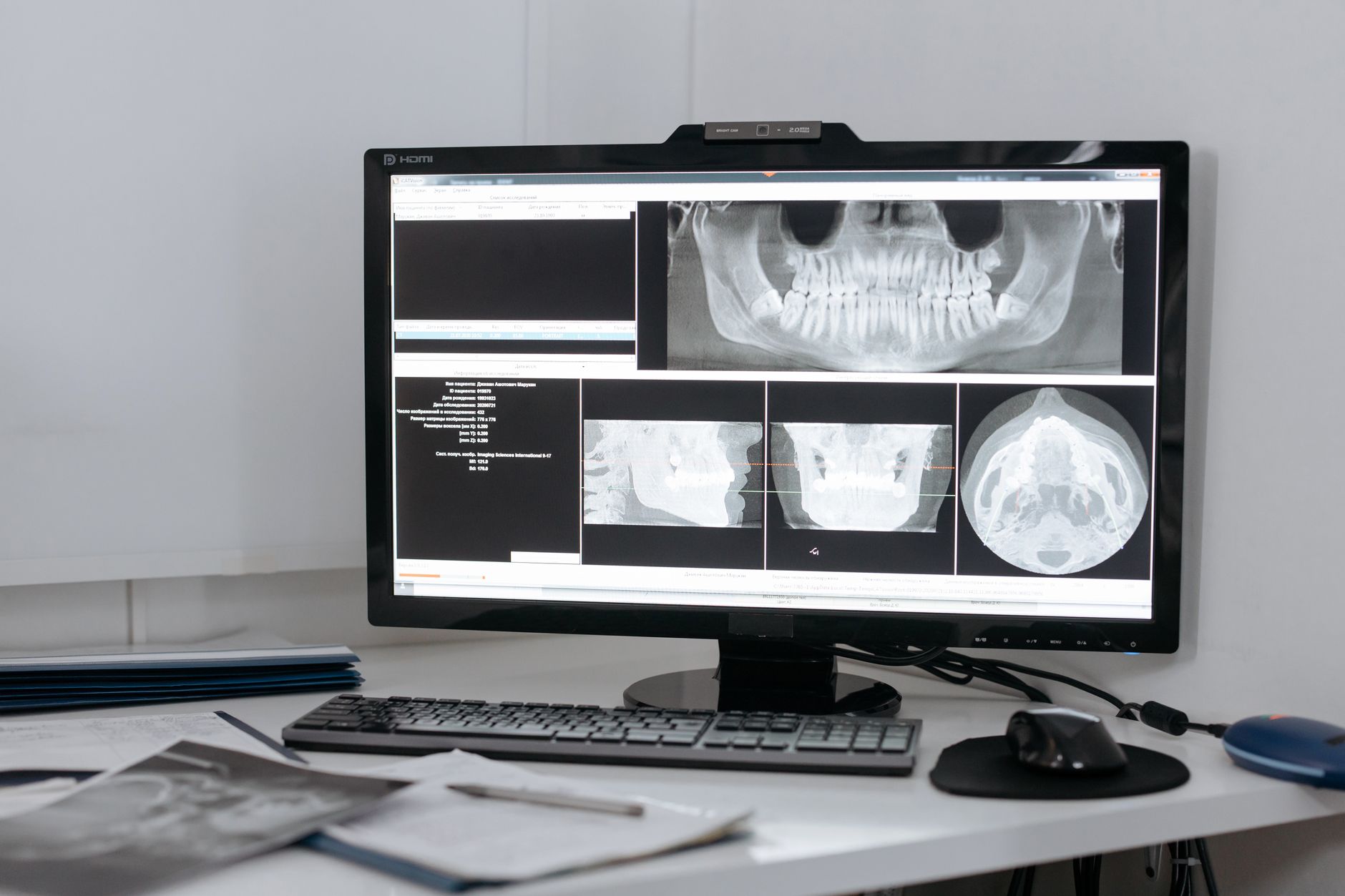
The second group, diagnostic and treatment considerations, is where most referrals for anatomy come from. The AAE suggests considering cone beam CT when assessing moderate and high difficulty cases.
| Criterion | Moderate difficulty | High difficulty |
|---|---|---|
| Tooth type | First molar | Second or third molar |
| Curvature | 10 to 30 degrees | Over 30 degrees, S-shaped or C-shaped |
| Canal visibility | Visible but reduced, pulp stones | Indistinct path, or canals not visible |
| Apex | Opening 1 to 1.5 mm | Open apex over 1.5 mm |
| Resorption | Minimal apical | Extensive apical, internal or external |
| Distance to IAN or mental foramen | 3 to 5 mm | Under 3 mm |
Diagnosis and radiographic difficulty
Signs consistent with a recognised pulpal and periapical condition are low difficulty. An extensive differential diagnosis is moderate. Confusing and complex signs and symptoms, or a history of chronic oral or facial pain, is high. Radiographs that are hard to take or read move a case up too: tori, a high floor of the mouth or a shallow palate is moderate, and superimposed anatomy that makes interpretation very hard is high.
Tooth position, inclination and isolation
Anteriors and premolars are low, first molars moderate, and second and third molars high on tooth type alone. Inclination or rotation of 10 to 30 degrees is moderate and over 30 degrees is high. A tooth that needs simple modification before rubber dam can go on is moderate; one that needs extensive pre-treatment to isolate is high. Full coverage restorations, porcelain, bridge abutments and teeth with extensive coronal destruction are all moderate on crown morphology.
Canal curvature, calcification and unusual anatomy
Curvature of 10 to 30 degrees is moderate. Curvature over 30 degrees, an S-shaped canal, C-shaped morphology, a canal that divides in the middle or apical third, a tooth longer than 25 mm, a lower premolar or anterior with two roots, an upper premolar with three, or an open apex wider than 1.5 mm are each high. Canals that are visible but reduced in size, or pulp stones, are moderate; an indistinct canal path, or canals and chamber that cannot be seen, is high.
These are the cases our page on locating calcified canals and shaping curved ones deals with in more detail.
Resorption and root apices close to the nerve
Minimal apical resorption is moderate. Extensive apical resorption, internal resorption and external resorption are high. Apices 3 to 5 mm from the inferior alveolar nerve or mental foramen are moderate, and under 3 mm is high.
Previous treatment, trauma and periodontal involvement
The third group, additional considerations, covers the history of the tooth. These are the cases that make up much of the referral form‘s case list: failed treatment, broken instruments, perforations, resorption and traumatic injuries.
Endodontic treatment history
No previous treatment is low. Previous access without complications is moderate. Previous access with complications (a perforation, a canal that could not be negotiated, a ledge or a separated instrument) is high, and so is any tooth that has already had surgical or non-surgical endodontic treatment completed. In other words, every retreatment is a high difficulty case on the AAE form. Our post on the signs that a root canal has failed covers the same ground from the patient’s side.
Dental trauma history
An uncomplicated crown fracture is low. A complicated crown fracture of a mature tooth, or a subluxation, is moderate. A complicated crown fracture of an immature tooth, a horizontal root fracture, an alveolar fracture, an intrusive, extrusive or lateral luxation, or an avulsion is high.
Combined periodontal and endodontic conditions
A combined endodontic and periodontal lesion is moderate. Concurrent severe periodontal disease, a cracked tooth with periodontal complications, or root amputation before endodontic treatment is high. Where a crack is suspected, our cracked tooth treatment page sets out how we assess it.
Have a case you are unsure about?
Send it through our referral form with radiographs, or call (02) 9129 0009 to talk it over before you open the tooth.
What the research says about case difficulty and root canal outcomes
The evidence linking the AAE form to outcomes is limited, and it is worth knowing what it does and does not show.
Case difficulty and procedural errors
Alamoudi and colleagues’ 2019 retrospective study graded 1,000 root canals treated in undergraduate clinics at King Abdulaziz University with the AAE form. High difficulty cases made up 19% of the sample but accounted for 157 (71%) of the 221 cases with an error, against 11 (5%) for minimal difficulty, and the association was significant. Underfilling, ledges, overfilling, separated instruments and perforations were the commonest errors, and molars carried most of them.
The limits are real: the operators were students, the study came from one school, and errors were judged from radiographs. It supports using the form for case selection; it does not tell us how experienced general dentists fare.
Factors that predict healing and tooth survival
Ng, Mann and Gulabivala’s prospective study, published in the International Endodontic Journal in 2011, followed primary and secondary root canal treatment by endodontic postgraduate students for two to four years. In part 1, on periapical healing, healing was significantly associated with no preoperative lesion (or a smaller one), no sinus tract, patency at the canal terminus, no extrusion of root filling and a satisfactory coronal restoration.
In part 2, on tooth survival, the factors associated with tooth loss included diabetes, systemic steroid therapy, preoperative pain, a discharging sinus, a narrow deep probing defect and iatrogenic perforation. Several of these are visible before treatment, which is the argument for assessing difficulty early. The study was not designed to compare operators, and its results came from one teaching setting.
A pre-access check for deciding whether to refer a root canal
None of this needs a scoring sheet on every case. These questions, asked with the radiograph up, follow the AAE form’s three groups in the order they tend to come up.
- Is the diagnosis clear? If the pulpal and periapical diagnoses do not fit the symptoms, or there is a history of chronic facial pain, the case is already moderate or high.
- Can you see the canals? Reduced or invisible canals, pulp stones, curvature over 10 degrees or unusual root numbers each move the case up. The AAE suggests considering CBCT at this point.
- Count the moderate factors. Three of them make a high difficulty case, even if no single one looks serious.
- Has the tooth been opened or treated before? Any completed treatment, or access with a complication, is high difficulty.
- Could you manage the complications? Healthdirect lists a file becoming stuck in the canal, injury to the root and too much or too little filling material among the possible complications. Plan for them before you start.
- Does the patient know the options? Informed consent covers the material risks, the alternatives and the option of referral.
What to include in an endodontic referral
A complete referral lets the consultation start with the tooth rather than with the paperwork. Our online referral form asks for the following, and the same list works for a letter.
- Patient details and relevant medical history, including medications and anything that affects anaesthesia or appointment length.
- Tooth number.
- Radiographs enclosed, yes or no, with the images attached.
- CBCT, yes or no. If a scan has been taken, send it so it is not repeated.
- Consultation only, or consultation and treatment.
- Case category: routine, cracked tooth, failed root canal (silver points, post, crown), broken instrument, calcified canals, perforation, apical surgery, resorption or traumatic injury.
- Clinical notes: symptoms and how long they have been present, sensibility and percussion findings, what has been done so far (access, medicament, temporary restoration), and anything the patient has been told.
Consultation only or consultation and treatment
Consultation only suits a case where the diagnosis is uncertain, where the tooth’s restorability or prognosis needs a view before anyone commits, or where you want to keep the treatment in house with a plan to work from. Consultation and treatment suits a case you already know is beyond what you want to take on. Either way the patient hears the options, including the ones that do not involve us.
Patients who contact us without a referral
Most of our patients are referred by their general dentist, and patients can also contact us directly. If a patient of yours has contacted us first, sending their radiographs and notes still helps, and avoids repeating images.
Root canal treatment risks, alternatives and second opinions
Whoever treats the tooth, root canal treatment and retreatment are invasive procedures with material risks, and results vary from tooth to tooth. Healthdirect’s root canal treatment page lists recurrent infection, injury to the root, discolouration of the tooth, a file becoming stuck in the canal and too much or too little filling material, and notes that a tooth may still need to be removed. Surgical options such as root end surgery carry their own risks, which are covered at consultation.
The alternatives belong in every consent conversation, whether or not the tooth is referred: extraction, with replacement by an implant, a bridge or a denture, or leaving the space; and no treatment, once the patient understands what that means for the tooth. Healthdirect notes that a patient can choose extraction instead of root canal treatment and should talk the options through with their dentist or endodontist.
A second opinion is always reasonable
Whether to treat, refer, extract or wait is a judgement that reasonable clinicians can weigh differently. Patients are welcome to take their radiographs and findings to another dentist or endodontist before they decide, and referring dentists are welcome to call us to talk a case through first.
Referring a root canal to our endodontists in Crows Nest
Our endodontists are registered specialists in endodontics with the Dental Board of Australia, and most of our patients are referred by their general dentist. Our endodontic practice in Sydney is at Level 3, Suite 301/34 Hume St, Crows Nest, near Crows Nest Metro station, and you can reach us on (02) 9129 0009.
For more clinical detail, our FAQs for clinicians answer questions colleagues have asked us about irrigation, file reuse, perforation repair and consent. What a referred patient pays depends on the tooth, the number of canals, whether it is a first treatment or a retreatment, whether surgery is needed and whether sedation is used, and we give the patient a written estimate after the examination.
Common questions
Should every molar root canal be referred to an endodontist?
No. On the AAE Endodontic Case Difficulty Assessment Form a first molar is a moderate factor and a second or third molar is high on tooth type alone, but the decision rests on the whole case and on your own training, equipment and comfort. A first molar with no other moderate factors is a moderate difficulty case.
Is it better to start the access and refer if it gets difficult?
The AAE form grades a tooth with previous access as moderate difficulty, and previous access with a complication such as a ledge, perforation or separated instrument as high. Assessing before access keeps the case at its original level and lets the patient make one decision rather than two.
Do I need a CBCT scan before referring a root canal?
No. Our referral form asks whether a CBCT has been taken, not that one has. The AAE suggests considering CBCT when assessing moderate and high difficulty cases. If a scan exists, sending it avoids a repeat exposure.
Is the AAE case difficulty form validated for general practice?
The AAE designed it for endodontic teaching and says dentists may also use it for referral decisions and record keeping. The main outcome study we know of, Alamoudi and colleagues in 2019, used undergraduate operators at one school, so it supports the form for case selection without measuring how experienced general dentists perform.
Can patients see an endodontist without a referral?
Yes. Most of our patients are referred by their general dentist, and patients can also contact us directly. Existing radiographs from their own dentist are still useful if they can be shared.
What will endodontic treatment cost a referred patient?
It depends on the tooth, the number of canals, whether it is a first treatment or a retreatment, whether surgery is needed and whether sedation is used. We give the patient a written estimate after the examination, before any treatment starts.
The short version
Refer a root canal when its difficulty is beyond your training, equipment or comfort, and make the call before access. The AAE case difficulty form makes a case high difficulty with one high factor or three moderate ones, and every retreatment counts as high.
- Patient factors (medical history, anaesthesia, anxiety, opening, gag reflex, acute presentation) count as much as anatomy.
- Curvature over 30 degrees, invisible canals, resorption, an open apex and complex trauma are each high difficulty.
- The research behind the form is limited, but it links higher difficulty with more procedural errors.
- Send radiographs, any CBCT, the tooth number, the medical history, the case category and your notes.
- Every option, including extraction and no treatment, belongs in the consent conversation, and a second opinion is always reasonable.
Refer a root canal case in Crows Nest
Refer through our online form, or call the practice to talk a case through first. Patients can also contact us directly.
Contact us Call (02) 9129 0009
(02) 9129 0009 · Crows Nest
Sources
- AAE Endodontic Case Difficulty Assessment Form and Guidelines (2022 version), American Association of Endodontists
- Guidelines: Scope of practice (in effect 1 July 2020), Dental Board of Australia
- Scope of practice registration standard (in effect 1 July 2020), Dental Board of Australia
- Alamoudi RA, Alharbi AH, Farie GA, Fahim O. The value of assessing case difficulty and its effect on endodontic iatrogenic errors: a retrospective cross-sectional study. Libyan Journal of Medicine, 2019, PubMed Central
- Ng Y-L, Mann V, Gulabivala K. A prospective study of the factors affecting outcomes of nonsurgical root canal treatment: part 1: periapical health. International Endodontic Journal, 2011, LSHTM Research Online
- Ng Y-L, Mann V, Gulabivala K. A prospective study of the factors affecting outcomes of non-surgical root canal treatment: part 2: tooth survival. International Endodontic Journal, 2011, LSHTM Research Online
- Root canal treatment (last reviewed February 2025), healthdirect Australia
This article is general information only and is not a substitute for advice about your own teeth from a registered practitioner. Every tooth is different, treatment carries risks, results vary from person to person, and what suits you can only be decided after an individual examination.