What if you could replace a lost tooth with your own tooth?
When a tooth cannot be saved, most people assume that a dental implant is their only modern solution. While implants are an excellent treatment option, they are not the only option.
A lesser-known but highly successful procedure called auto-transplantation allows us to move one of your own teeth from one area of the mouth to another, replacing a tooth that has been lost or cannot be saved.
The result? A living, natural tooth that continues to function as part of your body.
What is Auto-Transplantation?
Auto-transplantation involves carefully moving one of your own teeth—most commonly a wisdom tooth that is not serving a useful purpose—into the position of a tooth that must be removed.
Although the procedure has been performed successfully for more than 70 years, it has traditionally only been available in specialist centres because it requires close collaboration between highly skilled dental specialists.
At our Crows Nest practice, our team of specialists has worked together for many years, including at the Dental Hospital, giving us the experience and teamwork needed to provide this advanced treatment option.
Why Consider Auto-Transplantation?
Dental implants have transformed modern dentistry and remain an excellent solution for many patients. However, implants are not ideal for everyone.
Some patients take medications that can affect implant success. Others may experience long-term changes to the bone and gums around implants over many years.
Auto-transplantation offers a unique advantage: because the transplanted tooth is your own living tooth, it retains the natural ligament that connects teeth to bone.
This ligament helps:
- Maintain healthy bone levels
- Preserve the surrounding gum tissue
- Provide natural sensation and function
- Allow the body to recognise and support the tooth as a living structure
In many cases, this can help preserve the jawbone in a way that an implant cannot.
What Happens If a Tooth Cannot Be Saved?
Traditionally, patients have had three options:
1. Do Nothing
Sometimes this is possible, but missing teeth can lead to shifting of neighbouring teeth, bite problems, and difficulties with chewing.
2. Remove the Tooth Without Replacing It
While appropriate in some situations, this can result in loss of function and gradual changes to the surrounding bone and teeth.
3. Replace the Tooth
Replacement options include:
Dentures
- Removable replacement teeth
- Usually more suitable when multiple teeth are missing
- Removed at night
Dental Bridges
- A false tooth is attached to neighbouring teeth
- Often requires reshaping healthy adjacent teeth
Dental Implants
- A titanium screw is placed into the bone
- Functions independently of neighbouring teeth
- Fixed and non-removable
- Excellent long-term success rates
However, unlike a natural tooth, an implant does not have a periodontal ligament. Over very long periods, this may contribute to changes in the surrounding bone and soft tissues.
How Does Auto-Transplantation Work?
The process begins with a thorough assessment to determine whether you have a suitable donor tooth—most commonly a wisdom tooth.
Step 1: Planning
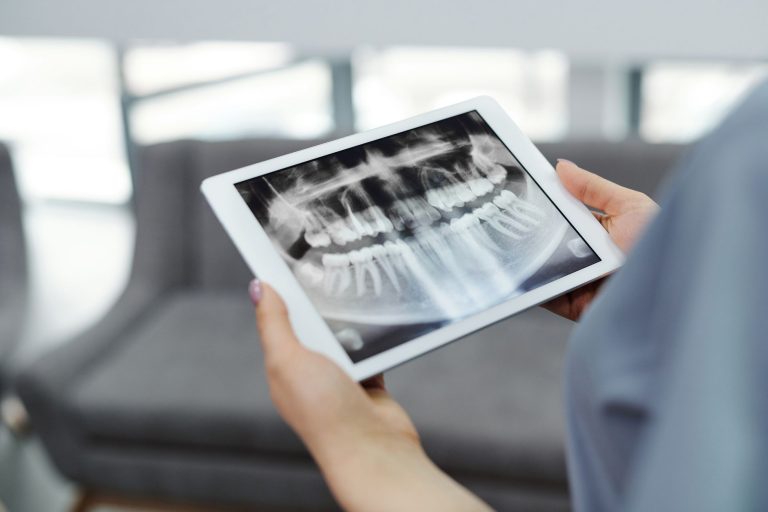
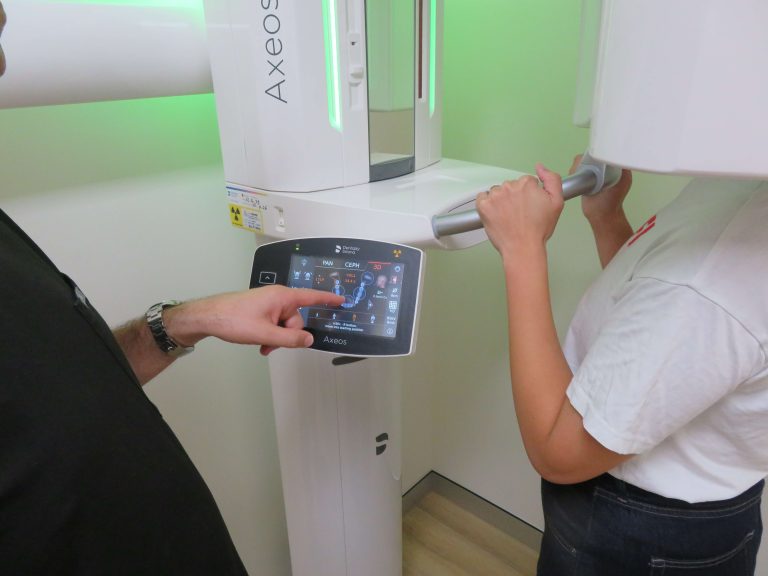
Advanced imaging is used to assess:
- The tooth that requires removal
- The available donor tooth
- The fit between the donor tooth and the recipient site
Step 2: Transplantation
Our Oral Surgeon carefully removes the tooth that cannot be saved.
The donor tooth is then gently removed and immediately placed into the new position.
The goal is to preserve the delicate ligament cells on the root surface, which are essential for successful healing.
Step 3: Healing
The transplanted tooth is allowed to heal and integrate into its new position.
Step 4: Root Canal Treatment
Once healing is established, our Endodontist performs root canal treatment on the transplanted tooth.
This prevents future infection while preserving the surrounding ligament and bone support.
The result is a functional tooth that can continue to support healthy bone and gum tissues for many years.
Why Isn’t Auto-Transplantation Offered More Often?
Auto-transplantation is one of dentistry’s best-kept secrets—not because it doesn’t work, but because it requires a highly coordinated team and considerable expertise.
Successful treatment depends on:
Careful Case Selection
Not every wisdom tooth is suitable. Matching the donor tooth to the recipient site requires experience and detailed planning.
Specialist Surgical Skill
The donor tooth must be removed with minimal trauma to preserve the delicate ligament cells on the root surface.
Advanced Endodontic Treatment
The transplanted tooth often has a different root anatomy from the tooth it replaces, requiring specialist root canal treatment to maximise long-term success.
For these reasons, auto-transplantation is rarely available in a single practice environment.
Is Auto-Transplantation Right for You?
If you have a tooth that cannot be saved and also have a suitable wisdom tooth or other donor tooth, auto-transplantation may provide an opportunity to replace a missing tooth with your own living tissue.
For selected patients, it offers a remarkable combination of biology, function, and long-term preservation of the surrounding bone and gums.
Sometimes the best replacement for a lost tooth isn’t an artificial one—it’s your own.