The short answer
A root canal may have failed if the tooth starts to ache again, hurts when you bite, the gum beside it swells or develops a pimple, or an X-ray shows a dark area at the root tip. Root canal retreatment means reopening the tooth, removing the old filling, cleaning the canals again and resealing them. Surgery and extraction are the alternatives.
Key points
- Returning pain, tenderness on biting, swelling or a gum pimple near a root filled tooth are the usual signs that infection has come back.
- Some failures cause no symptoms at all and are only seen on an X-ray, while a dark area on an early X-ray can still be healing.
- Common causes are canals that were not fully cleaned, leakage under a crown or filling, and cracks in the tooth or root.
- Retreatment reopens the tooth, removes the old root filling, cleans and reseals the canals, and is followed by a sealing restoration.
- Retreatment carries risks, results vary, and the alternatives are root end surgery, extraction and replacement, or monitoring. A second opinion is always reasonable.
Jump to a section 11
- What a failed root canal can feel like
- Can a failed root canal have no symptoms?
- Why a root canal can fail
- How a failed root canal is assessed
- What root canal retreatment involves, step by step
- What research says about root canal retreatment outcomes
- Risks of root canal retreatment
- Alternatives to root canal retreatment
- What changes the cost of root canal retreatment
- Getting a root filled tooth checked in Crows Nest
- Common questions
What a failed root canal can feel like
Root canal treatment removes infected or damaged pulp from inside a tooth, then cleans, shapes and seals the canals. When it works, the tissue around the root settles and the tooth goes on functioning. When bacteria survive or get back in, infection can return around the root, and the American Association of Endodontists notes that a treated tooth can become painful or diseased months or even years after treatment.
The signs are much the same as the ones that led to the first treatment. Healthdirect lists toothache, sensitivity, swelling near the tooth or jaw and a pimple-like bump near your tooth, which is pus building up. The AAE adds pain while chewing, an aching jaw and swollen gums as signs of an abscess, and says the infection may or may not be painful.
- Pain that comes back after the tooth had settled, whether a dull ache or a sharper pain.
- Tenderness when you bite or chew on that tooth, or a feeling that it sits slightly high.
- A small pimple or bump on the gum beside the tooth, which may come and go.
- Swelling of the gum, face or jaw near the tooth.
- The same symptoms you had before the first root canal, returning.
When it cannot wait
Swelling that is spreading, swelling of the face or neck, difficulty swallowing, or a fever alongside a sore tooth needs care the same day. Healthdirect advises an urgent dental appointment for severe pain or swelling. If you cannot reach a dentist, go to a hospital emergency department.
Can a failed root canal have no symptoms?
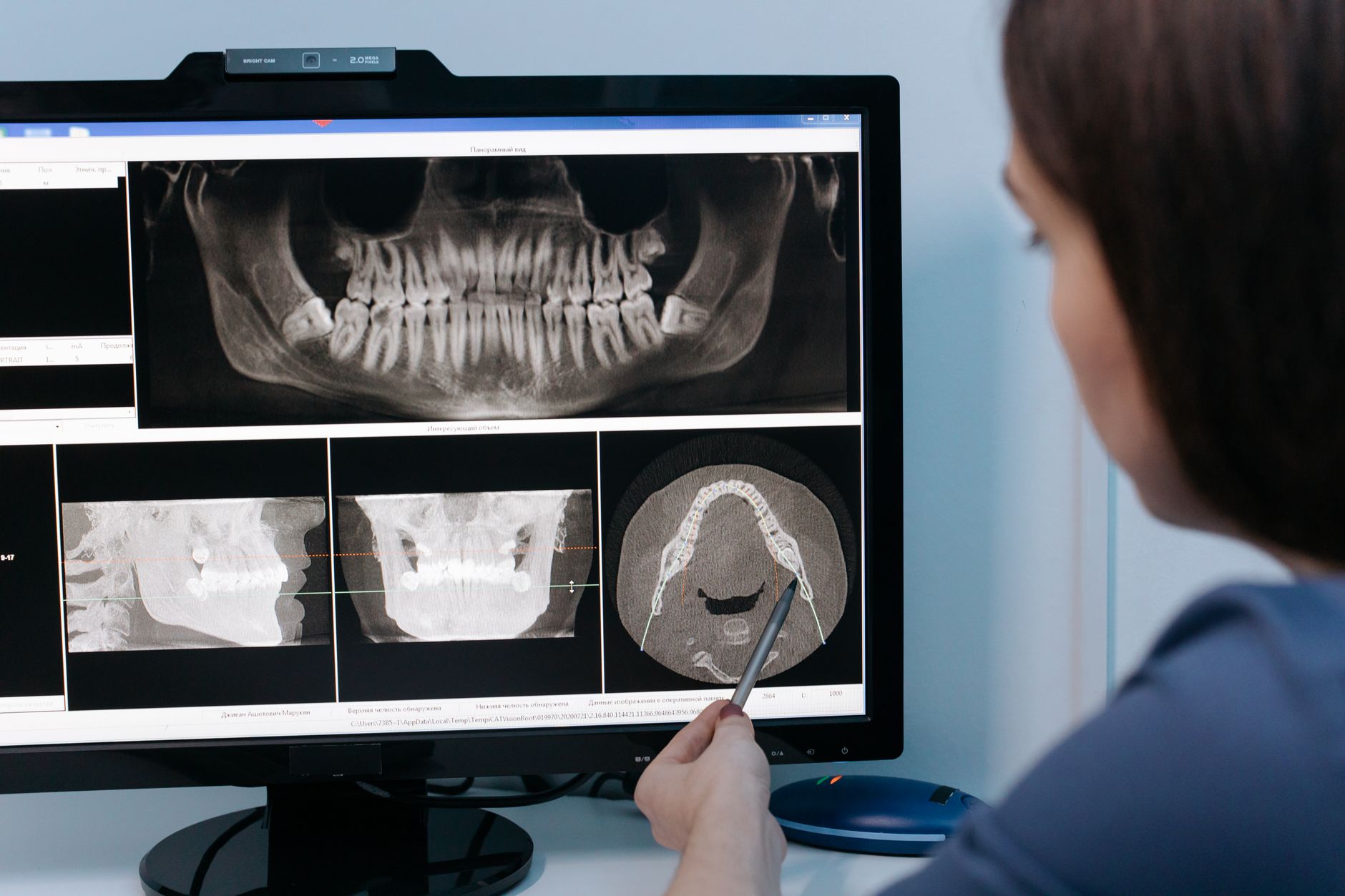
Yes. Some teeth feel completely normal and the problem only shows on an X-ray as a dark area around the root tip, where bone has been lost to a long standing infection. It may only be noticed on an X-ray taken for another reason.
The reverse also matters. A dark area on an X-ray taken soon after treatment is not automatically a failure, because bone takes time to fill in. A review by Ng and Gulabivala at the UCL Eastman Dental Institute notes that a persistent radiolucency without other signs may represent a healing lesion, and that the European Society of Endodontology’s 2006 quality guidelines recommend a review at least one year after treatment, then yearly for up to four years, before a case is judged to have failed.
So a single X-ray is rarely the whole story. Symptoms, how long ago the tooth was treated, and whether the dark area is shrinking or growing over time all go into the decision.
Why a root canal can fail
A root canal fails when bacteria remain in the canal system or get back into it. The AAE groups the causes into problems left from the first treatment and new problems that arise later. Often more than one is involved, and it is not always possible to tell which from the outside.
Canals that were not found or not fully cleaned
Teeth can have more canals than expected, and canals can be very narrow, curved or branched. Healthdirect notes that each tooth can have up to four canals. The AAE lists narrow or curved canals that were not treated and complicated anatomy that went undetected as reasons a tooth may not heal. Any untreated space can harbour bacteria that keep the infection going.
Leakage under a crown or filling
The root filling only stays clean if the top of the tooth is sealed. The AAE lists a delayed crown or restoration, a restoration that does not keep saliva out, new decay, and a loose, cracked or broken crown or filling as ways bacteria can reach the canals again. This is why the final restoration after any root canal matters as much as the canal work itself.
A crack or fracture in the tooth or root
A crack can let bacteria in along its length. The AAE notes that vertical root fractures often show minimal signs and symptoms and may go unnoticed until the surrounding bone and gum become infected. A tooth with a crack running down the root often cannot be repaired, and treatment may involve extraction.
A root filled tooth playing up?
Your dentist can refer you, or you can contact us directly. We will examine the tooth, explain what we find and go through the options, including surgery, extraction and waiting.
How a failed root canal is assessed
Before anyone talks about retreatment, the first job is to confirm that the root filled tooth is actually the source of the problem, and to find out why it has failed. Pain is not always coming from the tooth that seems to hurt. A clinical article by Satnam Singh Virdee notes that pain with neuropathic or non-odontogenic features should be investigated before any treatment starts.
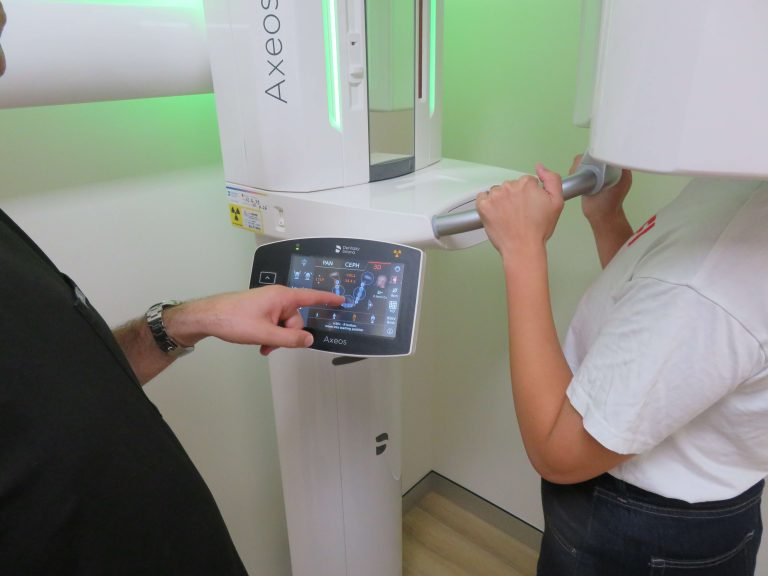
At the examination we ask about your symptoms and the history of the tooth, test the tooth and its neighbours, check the gum around it, and take X-rays. Sometimes a 3D scan (cone beam CT) is needed to see the root anatomy, the extent of a lesion or signs of a crack. The table below shows how the common findings tend to point the decision.
| What we find | What it can mean | What usually comes next |
|---|---|---|
| Pain or swelling with a dark area at the root tip | Infection persisting or returning around the root | Discuss retreatment, surgery or extraction |
| Gum pimple (sinus tract) beside the tooth | An infection draining through the gum | Find the source, then discuss treatment |
| Dark area on an X-ray, no symptoms, treated under four years ago | Possibly a lesion that is still healing | Often review with further X-rays over time |
| Dark area that is growing over time | Healing has not happened | Discuss treatment options |
| Infection in the gum and bone along the side of a root | Possible root fracture | Further investigation, extraction is often discussed |
| Leaking or broken crown over a root filled tooth | Bacteria may be reaching the canals | Assess the canals before the crown is replaced |
What root canal retreatment involves, step by step
Retreatment repeats the aims of the first root canal, with the extra work of getting the old material out. It is done under local anaesthetic, and the AAE and Dear Doctor both describe the same broad sequence. Where a crown, post or core is in the way, Dear Doctor notes it must be disassembled and removed to permit access to the root canals.
- Numbing and isolation. Local anaesthetic numbs the area, and a rubber sheet (a dam) keeps the tooth clean and dry.
- Access. An opening is made through the top of the tooth. If there is a crown, post or core in the way, it may have to be removed or worked through.
- Removing the old root filling. The previous filling material is removed from each canal.
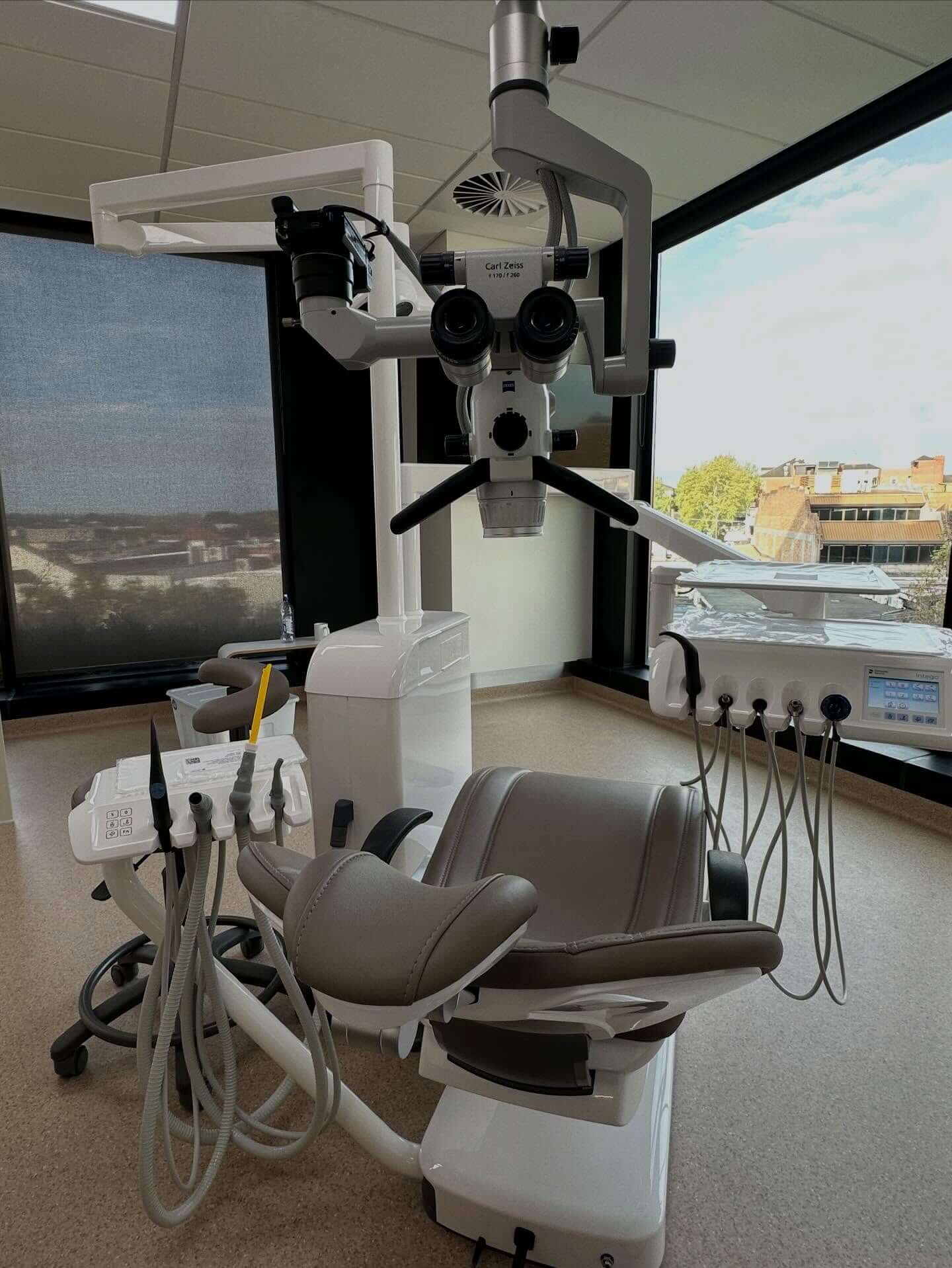
- Looking for what was missed. Under magnification, the canals are examined for extra canals, cracks or other problems.
- Cleaning and shaping. The canals are cleaned, shaped and disinfected again. If more than one visit is needed, a temporary filling seals the tooth in between.
- Sealing. The canals are filled and sealed, and the access is closed with a temporary or more permanent filling.
- Restoring the tooth. Your dentist then places the final filling or crown, which keeps bacteria out. Doing this promptly matters.
How many appointments retreatment takes, and how it feels afterwards
Retreatment often takes more than one visit, particularly when old material is hard to remove or an infection needs time to settle between appointments. We will tell you what to expect for your tooth at the examination.
Afterwards the AAE says you may feel some tenderness in the area for a few days, and that over-the-counter pain relief usually helps. Your jaw may also ache from being held open. Call us if pain is severe or lasts more than a few days, if swelling appears, if your bite feels uneven, or if a temporary filling comes out. If you are anxious about treatment, IV sedation is available and we can talk through whether it suits you.
What research says about root canal retreatment outcomes
Outcome studies measure whether the area around the root heals on X-rays, and the figures depend heavily on how strictly healing is defined and how long patients are followed. None of the figures below are ours, and none predict what will happen to a particular tooth.
A 2024 systematic review and meta-analysis by Olivieri and colleagues, summarised in Evidence-Based Dentistry by Hall, Baerts and Edwards, found that under strict criteria the pooled healing figure for non-surgical retreatment was 71% at one to three years and 77% at four to five years. Under looser criteria the figure at one to three years was 87%. The commentators note moderate to high variation between studies, and that most included treatment was carried out by endodontic specialists, which limits how far the figures apply elsewhere.
A 2025 systematic review by Falatah and colleagues in Cureus, covering 30 studies with follow-up typically of two to four years, did not pool the results because the studies were too different. It found that the presence and size of a lesion at the root tip were repeatedly linked to less favourable healing.
- Linked with less favourable outcomes in the 2024 meta-analysis: a lesion at the root tip before treatment, larger lesions over 5 mm, molar teeth, lower teeth and older patients.
- Linked with more favourable outcomes in the Falatah review: no lesion before treatment, smaller lesions, an adequate root filling and a good seal at the top of the tooth.
- Harder to fix: Ng and Gulabivala report that root perforations significantly compromised retreatment outcomes, and that only about half of the broken instruments in one large study could be removed or bypassed.
Risks of root canal retreatment
Retreatment is an invasive procedure and it carries risks. Results vary from person to person, and no one can promise that a retreated tooth will heal or how long it will last. Healthdirect lists the general complications of root canal treatment, which all apply to retreatment as well, and retreatment adds some of its own.
- Infection that persists or returns, so that surgery or extraction is needed later.
- Damage to a crown or post that has to be removed or worked through, which can mean a new crown.
- A broken instrument (a file) becoming stuck in a canal, or a perforation through the side of the root.
- A canal that cannot be reopened to its end because it is blocked or ledged.
- Too much or too little filling material, sometimes needing further treatment.
- Injury to the root of the tooth, or a crack that only becomes clear once the tooth is opened.
- Discolouration of the tooth, and tenderness, swelling or jaw ache for a few days afterwards.
A second opinion is always reasonable
Whether to retreat, operate, extract or wait is a judgement, and reasonable clinicians can weigh it differently. You are welcome to take your X-rays and our written findings to another dentist or endodontist before you decide anything.
Alternatives to root canal retreatment
Retreatment is not the only path, and for some teeth it is not the sensible one. The alternatives below each have their own risks, and we will go through how they apply to your tooth.
Root end surgery (apicoectomy)
When reopening the tooth is not practical, for example because of a post that would be risky to remove or a canal that is blocked, root end surgery treats the infection from the outside, through the gum at the tip of the root. Dear Doctor notes that endodontic surgery may be considered if non-surgical retreatment is not an option. We have written separately about how endodontic surgery compares with a root canal.
Extraction and replacement
Removing the tooth ends the problem in that tooth, and healthdirect notes it is an option for a badly damaged or infected tooth. Extraction is itself a surgical procedure with risks, and the gap is usually then replaced with an implant, a bridge or a denture, each with its own treatment time and risks.
Monitoring, or doing nothing
If there are no symptoms and the X-ray finding is small or may still be healing, monitoring with X-rays over time is often reasonable. Leaving a tooth that is actively infected is different: healthdirect warns that an untreated root canal infection can lead to chronic inflammation and damage to the tissue around the tooth, and the tooth may later need to be removed.
What changes the cost of root canal retreatment
We do not quote fees on the blog, because the cost depends on the tooth and on what the examination shows. After we have examined the tooth you receive a written estimate before any treatment starts. These are the things that change it:
- Which tooth it is and how many canals it has.
- Whether a crown, post or core has to be removed first.
- What is in the canals: the type of old filling material, and whether there is a blockage or broken instrument.
- How many visits it needs, and whether a 3D scan is required.
- Whether surgery is needed instead of, or as well as, retreatment.
- Sedation, if you choose it.
- The final crown or filling, which your dentist places and charges for separately.
Getting a root filled tooth checked in Crows Nest
Most of the people we see are referred by their general dentist, who can send us details and X-rays through our online referral form. You can also contact us directly without a referral. Our rooms are at Level 3, 34 Hume St, Crows Nest, near Crows Nest Metro station.
If you are looking for a specialist endodontist in Sydney to assess a tooth that has been treated before, bring any X-rays you have and a list of your medications. We will examine the tooth, explain what we find, and talk you through every option, including the ones that do not involve us.
Common questions
Can a root canal fail years later?
Yes. The American Association of Endodontists notes that a treated tooth can become painful or diseased months or even years after treatment, for example through new decay, a leaking or broken crown, or a crack that lets bacteria back in.
Is root canal retreatment painful?
It is done under local anaesthetic, which numbs the tooth and the area around it. Afterwards some tenderness for a few days is common and usually responds to over-the-counter pain relief. Tell us if pain is severe, worsening, or lasts more than a few days.
Is it worth retreating a tooth, or should I have it taken out?
It depends on how much sound tooth is left, whether there is a crack, the state of the gum and bone, and what you want. Retreatment keeps the natural tooth if it works, but it has risks and results vary. Extraction followed by an implant, bridge or denture is a reasonable choice for some teeth. A second opinion is always reasonable.
Can antibiotics fix a failed root canal?
No. Healthdirect states that antibiotics alone do not work to cure root canal infections. The infection has to be dealt with at its source, by cleaning and sealing the canals, by surgery, or by removing the tooth.
How long does root canal retreatment take?
Retreatment often takes more than one appointment, especially if a crown or post has to be removed or the old filling is hard to clear. Healing of the bone around the root takes much longer, and is checked with X-rays over the following months and years.
The short version
A root canal can fail when bacteria survive or get back into the tooth, and the signs are returning pain, tenderness on biting, swelling, a gum pimple or a dark area on an X-ray. Retreatment reopens and recleans the canals, but it has risks and results vary.
- A dark area on an X-ray soon after treatment may still be healing, so timing matters.
- Missed canals, leakage under a crown and cracks are the usual causes.
- Alternatives include root end surgery, extraction and replacement, or monitoring.
- You get a written estimate after the examination, and a second opinion is always reasonable.
Have a root filled tooth assessed in Crows Nest
We see patients referred by their dentist and patients who contact us themselves. Call us or send a message and we will find a time to examine the tooth and talk through the options.
Contact us Call (02) 9129 0009
(02) 9129 0009 · Crows Nest
Sources
- Root canal treatment (last reviewed February 2025), healthdirect Australia
- Endodontic retreatment, American Association of Endodontists
- Abscessed teeth, American Association of Endodontists
- Cracked teeth, American Association of Endodontists
- Root canal post treatment care, American Association of Endodontists
- Hall A, Baerts E, Edwards D. Root canal re-treatment with gutta percha: which techniques influence success? Evidence-Based Dentistry 2024;25(2):104-105, PubMed Central
- Falatah AM et al. Clinical outcomes of nonsurgical retreatment in teeth with persistent apical periodontitis: a systematic review. Cureus 2025;17(12):e98601, PubMed Central
- Ng Y-L, Gulabivala K. Outcome of non-surgical retreatment (Endodontic Topics, author manuscript), UCL Discovery
- Virdee SS. When and when not to initiate endodontic retreatment (8 May 2024), Dentistry.co.uk
- Root canal retreatment, Dear Doctor
This article is general information only and is not a substitute for advice about your own teeth from a registered practitioner. Every tooth is different, treatment carries risks, results vary from person to person, and what suits you can only be decided after an individual examination.